Table of Contents
ToggleBusinesses that manufacture, import, distribute, or use biocidal products in Europe must comply with strict regulatory requirements to ensure products are safe for human health and the environment. Over the years, the European Union has strengthened its regulatory framework by transitioning from the Biocidal Products Directive (BPD) to the more comprehensive Biocidal Products Regulation (BPR). Understanding the differences between the Biocidal Products Directive, Biocidal Products Regulation, and Biocidal Product Authorisation is essential for companies looking to market disinfectants, preservatives, pest control products, and other biocidal products within the UK and EU markets. This blog will explain the evolution of the legislation, its key requirements, and what businesses need to know to remain compliant.
What Is the Biocidal Products Directive (BPD)?
The European Union introduced the Biocidal Products Directive (98/8/EC) to create uniform standards for the approval and sale of biocidal products across all member countries. Before the Directive, each nation had its own laws, making it challenging for companies to sell their products across Europe.
The primary objectives of the Biocidal Products Directive were to:
- Protect human health and the environment.
- Establish common rules for approving active substances.
- Ensure biocidal products placed on the market are effective for their intended use.
- Promote fair competition within the EU internal market.
Under the Directive, any active substance used in biocidal products had to be scientifically assessed before it could be approved for use. Once an active substance was approved, product manufacturers could then apply for permission to sell their products in each member state.
Why Was the Biocidal Products Directive Replaced?
Although the Directive established a common framework, businesses continued to face challenges due to inconsistent implementation across Member States. To improve efficiency and strengthen consumer protection, the European Union introduced the Biocidal Products Regulation (EU) No. 528/2012, which replaced the Directive and entered into full force and effect on 1 September 2013. Unlike a Directive, which must be implemented into national law, a Regulation applies directly across all EU Member States. This creates greater consistency and reduces regulatory differences between countries.
What Is the Biocidal Products Regulation (BPR)?
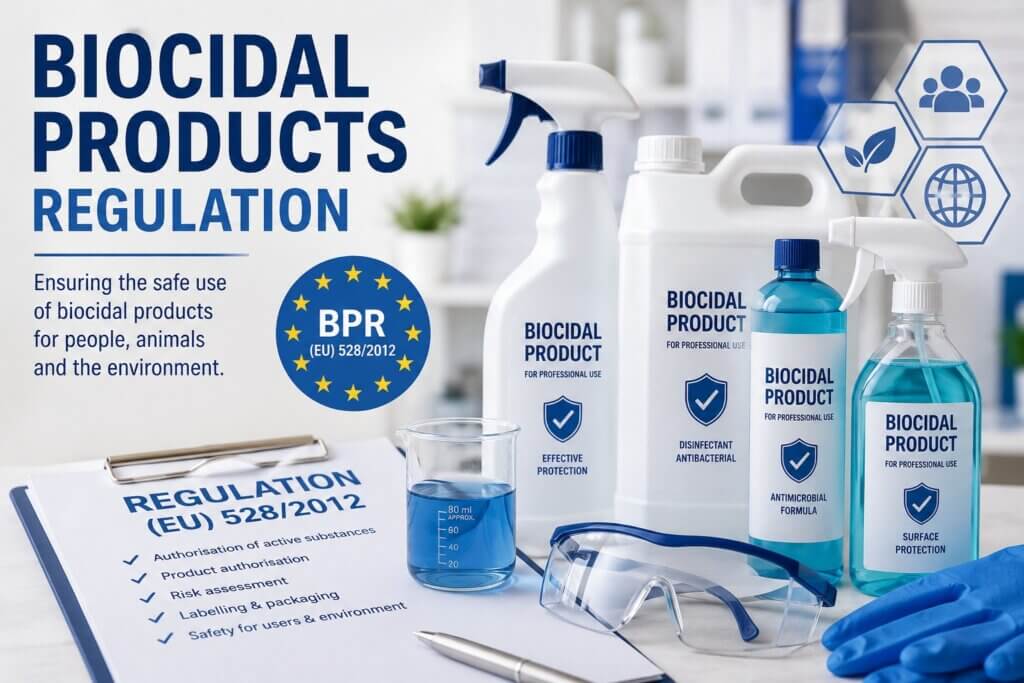
The Biocidal Products Regulation (BPR) establishes a harmonised system for approving active substances and authorising biocidal products throughout the European Union.
The Regulation aims to:
- Improve protection for people, animals, and the environment.
- Simplify product authorisation procedures.
- Increase transparency throughout the approval process.
- Encourage innovation by providing clearer regulatory pathways.
- Facilitate the free movement of compliant biocidal products across EU markets.
The BPR is administered through cooperation between the European Commission, Member State Competent Authorities, and the European Chemicals Agency (ECHA).
Key Differences Between the Biocidal Products Directive and the Biocidal Products Regulation
Although both pieces of legislation pursue similar objectives, there are several important differences.
1. Legal Status
The Biocidal Products Directive required each Member State to incorporate its provisions into national legislation, resulting in some differences in interpretation and enforcement. The Biocidal Products Regulation applies directly across the EU, creating a more uniform legal framework.
2. Union Authorisation
One of the biggest improvements introduced under the Regulation is the Union Authorisation process. Instead of applying separately in multiple countries, eligible products can receive a single authorisation that allows them to be marketed throughout most EU Member States, reducing administrative burden and costs.
3. Treated Articles
The Regulation introduced specific rules for treated articles, such as furniture, textiles, paints, plastics, and construction materials that have been treated with biocidal substances. Only approved active substances may be used in treated articles sold within the EU, and additional labelling requirements may apply.
Biocidal Product Authorisation in the UK
Following the UK’s departure from the European Union, Great Britain now operates under the GB Biocidal Products Regulation (GB BPR). Although the legislation closely mirrors the EU framework, businesses wishing to market products in Great Britain must comply with UK-specific regulatory requirements administered by the Health and Safety Executive (HSE). The GB BPR does not cover Northern Ireland. Under the Windsor Framework, Northern Ireland continues to follow the EU Biocidal Products Regulation (EU BPR). This distinction is particularly important for businesses placing biocidal products on the market across different parts of the UK, as separate regulatory requirements may apply depending on where the product is supplied. Biocidal Product Authorisation in the UK is the legal process that confirms a product has been thoroughly assessed and can be placed on the market for its intended use. Without the appropriate authorisation, a biocidal product cannot generally be legally supplied or marketed in Great Britain.
Main Requirements for Biocidal Product Authorisation in the UK
Obtaining Biocidal Product Authorisation in the UK requires businesses to submit detailed scientific and technical information demonstrating compliance with the GB BPR.
1. Approved Active Substances
Every active substance contained within the product must be approved or otherwise eligible under the relevant regulatory provisions for the intended Product Type. The approval status of active substances is one of the first aspects assessed during the authorisation process.
2. Product Type Classification
Biocidal products are classified into 22 Product Types (PTs), which are grouped into four main categories based on their intended use:
- Disinfectants (e.g. human hygiene disinfectants, surface disinfectants, veterinary hygiene products, and food and feed area disinfectants)
- Preservatives (e.g. wood preservatives)
- Pest Control (e.g. insecticides and rodenticides)
- Other Biocidal Products (e.g. antifouling products)
Correct classification ensures the product is assessed against the appropriate regulatory criteria.
3. Technical Documentation
Applicants seeking Biocidal Product Authorisation in the UK must prepare a comprehensive technical dossier that demonstrates the safety, quality, and effectiveness of their product. This dossier generally includes detailed information on the product’s formulation and composition, physical and chemical characteristics, toxicological data, environmental risk assessments, ecotoxicological information, product efficacy studies, and proposed labelling and instructions for use.
4. Meet Labelling and Packaging Requirements
Products must comply with UK labelling and packaging requirements. Labels should clearly identify active substances, hazard classifications, precautionary statements, directions for use, and any necessary safety information to ensure products are used correctly.
5. Comply with Article 95 Requirements
Businesses supplying biocidal products in Great Britain should ensure that the active substance supplier or biocidal product supplier is included on the relevant Article 95 list, where applicable. Failure to meet these obligations may prevent a product from being legally placed on the market. Businesses should also be aware of the HSE’s 2025–26 amendments to the GB Biocidal Products Regulation, including changes to Article 95(5) data protection period and the extension of approval expiry dates to 31 July 2031 for active substances previously due to expire between June 2026 and July 2031. Regularly reviewing the latest HSE guidance and regulatory updates helps ensure continued compliance, maintain Article 95 eligibility, and avoid disruptions to market access.
Conclusion
The transition from the Biocidal Products Directive to the Biocidal Products Regulation represents a significant advancement in the European Union’s approach to regulating biocidal products. For manufacturers, importers, and distributors, understanding the differences between the Biocidal Products Directive, Biocidal Products Regulation, and the requirements for Biocidal Product Authorisation in the UK is essential for maintaining compliance and ensuring continued access to the European market. By staying informed and implementing a proactive compliance strategy, businesses can confidently navigate regulatory requirements while supporting safe and effective biocidal products across Europe.
Need Support Navigating UK & EU Regulations?
Let C4C simplify compliance and help your business achieve seamless market access with confidence.
Contact UsFAQs
Manufacturers, importers, distributors, and businesses placing biocidal products on the Great Britain market generally require Biocidal Product Authorisation under the GB Biocidal Products Regulation (GB BPR). Products cannot usually be legally supplied without meeting the applicable regulatory requirements.
The Biocidal Products Regulation covers a wide range of products, including hand sanitisers, surface disinfectants, veterinary hygiene products, wood preservatives, insecticides, rodenticides, antifouling products, and other products designed to control harmful organisms through chemical or biological action.
Businesses applying for Biocidal Product Authorisation typically need to submit a comprehensive technical dossier containing product composition, physical and chemical properties, toxicological and ecotoxicological data, environmental risk assessments, efficacy studies, proposed labelling, packaging information, and instructions for safe use.
Article 95 requires that the supplier of an active substance or biocidal product is listed on the relevant Article 95 list where applicable. This helps ensure that only products containing approved active substances from compliant suppliers can be legally placed on the market.
The timeframe for obtaining Biocidal Product Authorisation depends on factors such as the product type, completeness of the technical dossier, complexity of the scientific assessment, and the regulatory authority reviewing the application. Providing accurate documentation can help reduce delays during the approval process.